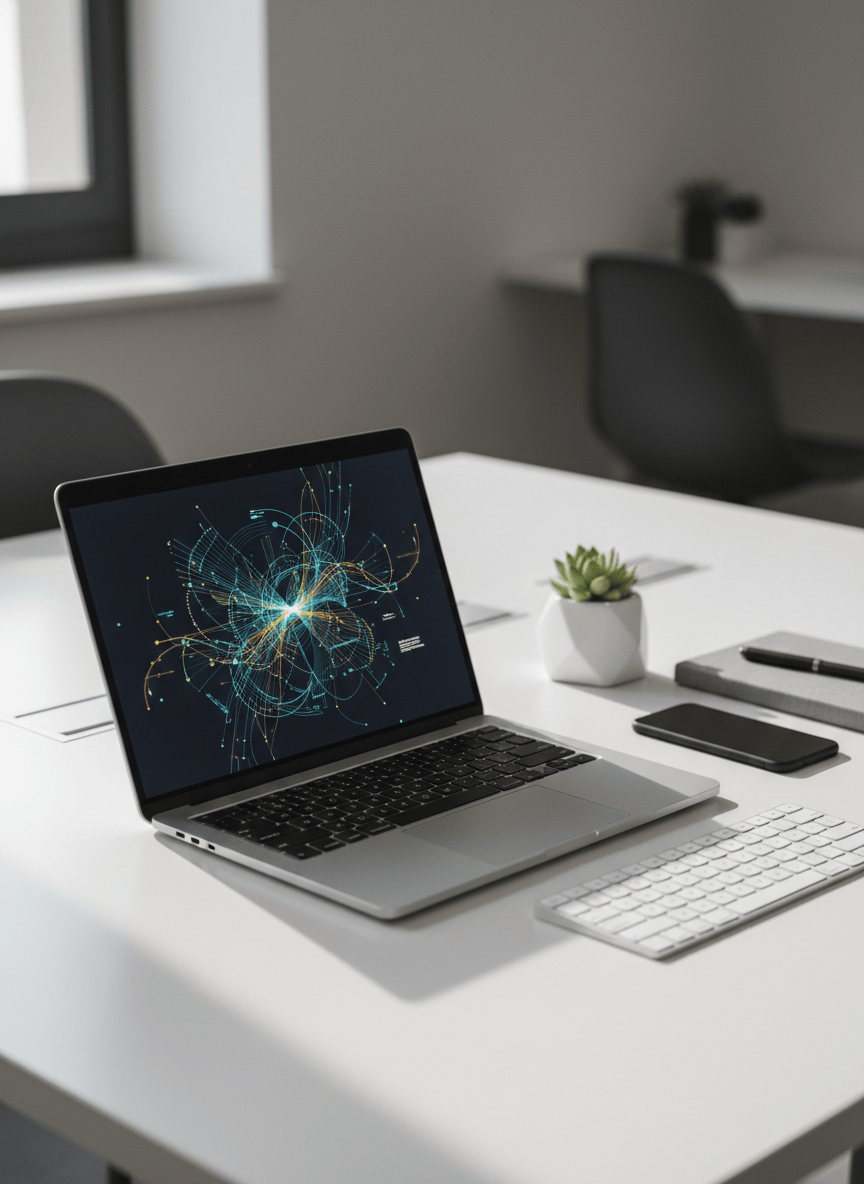
The laptop was supposed to simplify the desktop. One computer, one screen, one keyboard, and perhaps no permanent desk at all. Instead, the workspace has begun to accumulate a new generation of small, specialized devices. Some control software. Others direct light or change the way our hands move. They are accessories, certainly, but they also suggest that personal computing is becoming more physical again.
Elgato’s Stream Deck Neo is a particularly revealing example. Its eight LCD buttons offer an alternative to remembering commands and navigating nested menus. An action that once lived behind a keyboard shortcut or in a toolbar can become something with its own illuminated label. That is not a revolution, but it changes the relationship between the user and the machine: a software function has acquired a physical place.
The same argument appears in the design of modern pointing devices. A mouse such as Logitech’s MX Master 3S treats navigation as a collection of distinct tasks rather than a single movement across the screen. Additional controls invite users to shape how they work in spreadsheets, design programs or long documents. There is no guarantee that more buttons make anyone productive. But they give people a different vocabulary for interacting with software.
Even a light can be part of this change. BenQ’s ScreenBar Halo treats the monitor as a piece of furniture around which a lighting system can be organized. Instead of placing another object on the desk, the lamp uses the display’s upper edge and offers separate front and rear illumination. The task is not computation, but the same design principle applies: a small object is carefully assigned one recurring job.
The growth of these accessories comes with an obvious contradiction. Every attempt to simplify work can produce another cable, application, firmware update or charging requirement. A desktop crowded with clever controls can become a museum of abandoned productivity ideas. The right purchase is not the device with the most elaborate demonstration. It is the one that solves a problem that actually occurs.
There is also a more human reason these tools appeal. Touchscreens and cloud software have made computers fantastically versatile, but they can feel abstract. A button you can press without looking, a lamp you can turn toward a page, or a mouse with a distinct physical control brings some of the work back into the room.
The desk, then, is not disappearing. It is evolving into a place where a powerful general-purpose computer is surrounded by smaller objects that express the owner’s habits. When the arrangement works, the result is less like a command center and more like a well-used workshop.
Source: Product information and background. Product features, compatibility, pricing and availability can change.

