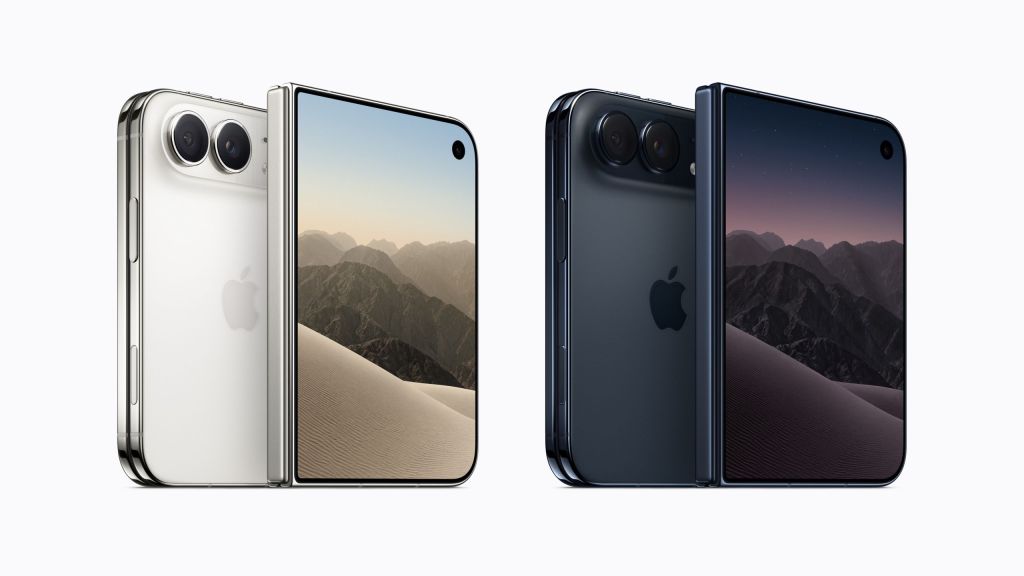
Apple has spent most of the smartphone era perfecting a glass rectangle. The iPhone Duo is what happens when the company finally decides that a rectangle might be more interesting if it opened like a book. Folded, it looks like a compact and unusually thick iPhone. Opened, it becomes a small tablet. That simple movement gives the product an identity more radical than another camera lens or another increment in processor speed. For the first time in years, Apple’s flagship phone asks its owner to think about physical form as part of the interface.
The idea is immediately attractive. A phone is wonderfully portable until the task becomes too large for its screen. A photograph deserves a closer look, a long article begs for a more generous layout, and two applications may need to be consulted at once. The obvious answer has always been to bring a tablet too. A foldable device proposes a compromise: carry the small screen everywhere, then open a larger screen when the moment calls for it. The appeal is not difficult to understand.
Apple’s Duo has a 5.4-inch exterior OLED display and a 7.6-inch interior OLED screen. The proportions are especially interesting. The phone is short and broad when closed, a little more passport-like than the familiar tall handset. When opened, the interior canvas is squatter than many rival foldables, potentially well suited to reading, video and certain forms of multitasking. The geometry invites more than admiration. It may change which activities seem natural on a phone.
The company has also spent considerable effort on the surface where the device folds. A nano-texture finish on the inner display is intended to cut glare and reduce the visibility of the crease. The crease is not an imaginary problem; foldable displays must bend, and the center can betray that engineering. Independent early reports suggest Apple’s treatment makes the fold less conspicuous, though it does not make the physical structure disappear. That distinction is worth preserving amid the excitement of a new category.
A pocket computer that changes shape
The most promising use of a foldable phone may be entirely ordinary. A newspaper article that felt cramped on the outer display could become a much more pleasant reading experience when the phone opens. A photograph can be examined without the constant pinch-and-zoom ritual. A map can show an entire neighborhood instead of a few blocks. These are not futuristic capabilities. They are familiar jobs made more comfortable by giving the screen additional room.
Multitasking is where Apple’s software faces a real test. The Duo runs a version of iOS designed to accommodate the two display sizes, with applications and content changing arrangement as the device opens and closes. Apple supports Split View and additional postures that make the folding hardware part of the interaction. These possibilities are exciting, but the experience depends on application developers doing their part. A beautifully engineered hinge cannot rescue a poorly adapted app.
A foldable design also makes the phone less dependent on an accessory stand. Half-open, it can rest on a table for a call or video. Another orientation can position the display for a glance while leaving the hands free. Such conveniences sound minor until they become habitual. Much of the best smartphone design is about removing small bits of friction, the adjustments and workarounds people perform without even noticing. The folding body may open a new field for that kind of improvement.
Apple has built the device around its A20 Pro processor, a custom display engine and a hinge containing more than a hundred parts. These are impressive elements of engineering. The more important question is whether their sophistication becomes invisible in use. A foldable phone should not feel like a machine that requires delicate negotiation every time it opens. It should behave like a natural extension of the ordinary gesture of picking up a phone and looking at something.
The cameras are a reminder that first-generation designs involve choices. The Duo carries a 48-megapixel main camera and a 48-megapixel ultrawide, with an optical-quality 2x option from the main sensor. That arrangement is versatile, but shoppers should not confuse it with the longer optical reach available on some conventional flagship handsets. The unusual form makes some new photographic positions possible; it does not automatically give the device the best camera hardware in Apple’s lineup.
The first new iPhone habit in years
One of the more unusual choices is Touch ID in the side button rather than Face ID. On a conventional iPhone, that might look like a backward step. On a phone that can be used closed, opened, half-folded or lying on a table, an accessible side sensor has a practical logic. Whether buyers prefer it will depend on daily habits. Foldable computers invite designers to reconsider assumptions that hardened during the years when every smartphone was a single rigid slab.
Durability deserves attention because the moving mechanism is the novelty. Apple claims IP68 water and dust resistance and describes titanium structural elements, protective glass and a complex reinforced hinge. None of those claims can substitute for years of repair history. The category has matured, but folding screens remain more mechanically demanding than ordinary glass. A buyer spending roughly two thousand dollars should be as interested in warranty and repair arrangements as in the beauty of the hardware.
The device’s weight is another part of the compromise. Apple lists approximately 254 grams, substantially more than many conventional phones. When closed, it is also thick enough to make the pocket experience meaningfully different. That is the price of carrying two displays and a hinge in a single object. People who prize minimum weight may reject it immediately. Others may consider it a fair trade for a small tablet that happens to fold into a phone.
Battery life is potentially reassuring, with Apple estimating up to 24 hours of typical mixed-display use and higher video-playback figures in certain modes. The company uses two internal batteries, one on either side of the hinge, to make use of the available volume. Real results will depend heavily on how often the larger display is used, the applications running and the brightness required. A first-look story should not pretend these published figures are measured results from weeks of ownership.
Perhaps the Duo’s most intriguing quality is the possibility of changing the mental boundary between phone and tablet. The ordinary smartphone has become an object consulted almost compulsively, often in tiny bursts of attention. A larger, book-like display might encourage longer, more deliberate sessions: finish the article, examine the photograph, write the note. It could just as easily become a larger surface for distraction. The hardware cannot decide how its owner spends time, but it can make different behaviors more appealing.
That is why the iPhone Duo deserves more attention than a routine annual upgrade. Its success will not be measured solely by how well it survives drop tests or how quickly an app launches, though both matter. It will be measured by whether opening the phone feels useful enough to become instinctive. Foldables have already made that case to many Android users. Apple’s contribution is to bring its own design discipline, software habits and enormous ecosystem to the experiment.
The first generation will certainly be followed by refinements. Screens may become lighter, hinges simpler, cameras more ambitious and applications better adapted. Yet it is worth noticing the moment when a familiar product becomes unfamiliar again. The iPhone Duo turns a phone into something closer to a pocket book, and that is a delightful idea. Whether it proves the best foldable for a particular buyer requires firsthand assessment over time. The design alone makes this one of the most interesting iPhones in years.
Product reporting: Apple announcement and technical specifications.

