★★★★★ | Five stars
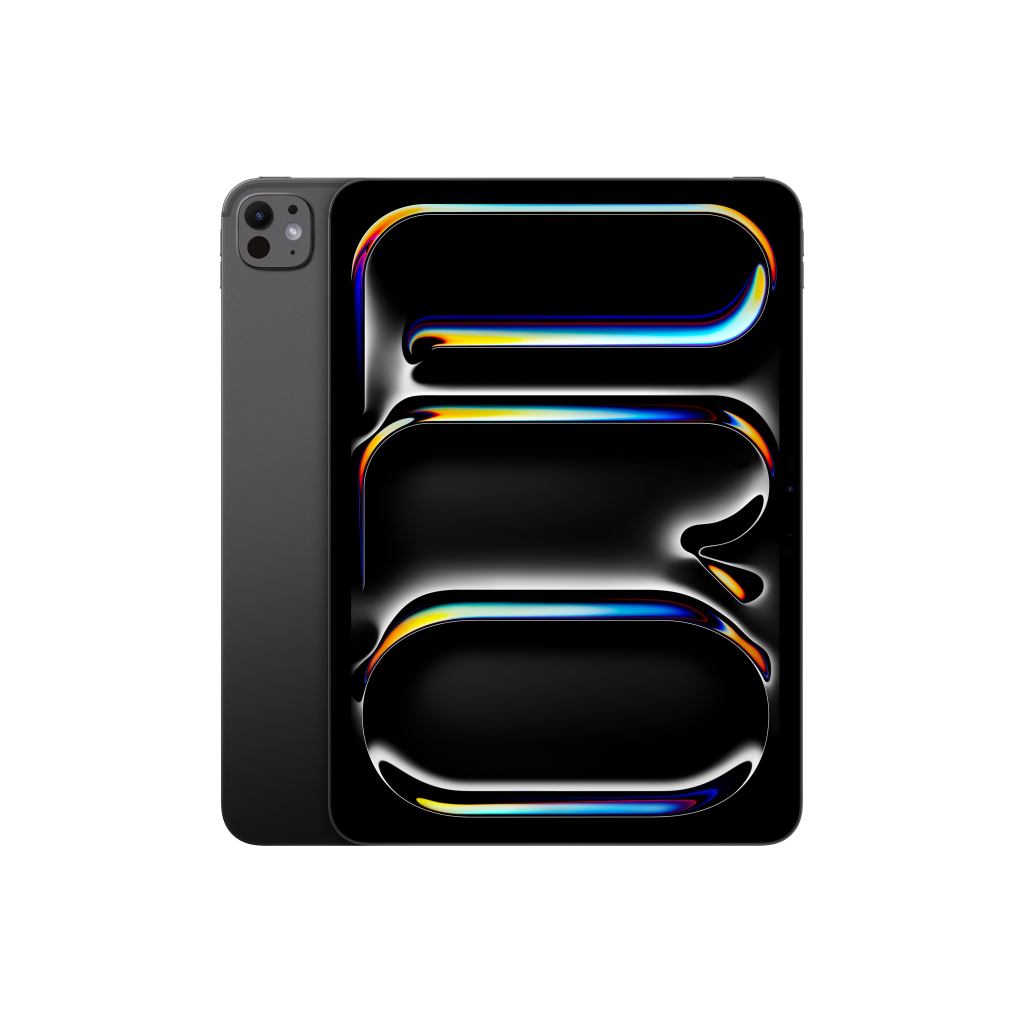
The specific tablet in this review is the 2024 11-inch iPad Pro with Apple’s M4 chip. At 5.3 millimeters thick and about 444 grams in its Wi-Fi configuration, it is exceptionally easy to carry. The 2420-by-1668 tandem OLED panel is Apple’s Ultra Retina XDR display, with ProMotion up to 120Hz; Apple Pencil Pro and the landscape-positioned front camera belong to this generation. This is the M4 model, not the later M5 revision.
The 11-inch iPad Pro has a difficult job: it must be powerful enough to justify the word Pro without becoming so cumbersome that you might as well carry a laptop. It succeeds because the screen is big enough to work on and small enough to hold. That balance sounds mundane. It is one of the hardest things in mobile computing to get right. In a market that regards bigger displays as an uncomplicated sign of progress, the smaller Pro makes a surprisingly persuasive argument for restraint.
I have used an 11-inch iPad Pro for reading, writing and media, the sort of mixed routine that exposes a tablet’s strengths and peculiar limitations. A full laptop is better for some long stretches of typing, and a phone is more convenient when standing in a crowd. The iPad lives in the middle. It is a screen you can bring into a chair, hold like a magazine, set beside a keyboard or prop up for a film. That versatility is more valuable than a spectacular benchmark result.
The design is deceptively simple. A large piece of glass has been made thin and precise, with enough frame around it to hold without constantly touching the display. Apple has steadily refined the Pro into an object that seems almost indifferent to the complexity inside it. This is the sort of hardware accomplishment that is easiest to overlook because the absence of visible clutter feels natural. An extravagant laptop advertises its engineering in vents and hinges. A great tablet tends to hide everything.
The display is a major part of the attraction. Current iPad Pro models use Apple’s Ultra Retina XDR tandem OLED technology, though older generations differ. Whatever the generation, the value of a premium tablet screen becomes obvious when reading a long page, inspecting a photograph or watching a film. Text is presented at a size that invites actual reading rather than the tiny glances encouraged by a phone. The screen is not simply a window into software. It is the device’s principal piece of furniture.
A tablet that knows when to be small
Eleven inches sounds like a minor distinction from thirteen until you have to carry the thing. The smaller iPad slides more naturally into a bag, sits comfortably on a crowded café table and takes up less visual territory in a living room. It feels more like an unusually capable notebook than a monitor with a battery attached. The reduction in workspace is real, particularly with two applications side by side. But the gain in everyday accessibility can make the difference between owning a tablet and actually using it.
Apple’s Pencil and keyboard accessories extend the device in different directions. A stylus turns it into a place for annotations, sketching and the occasional diagram. A keyboard gives it some of the familiar habits of a computer, though I would hesitate to pretend that attaching one magically turns iPadOS into macOS. The hardware has long been powerful; the questions are about the software interface and the jobs a person is willing to change in order to use it.
For anyone who reads widely, this is an especially attractive size. A web article feels less like a miniature webpage; a digital magazine regains some of its original sense of layout. A PDF may still require zooming, and a large printed page can become awkward. But compared with a phone, the tablet gives text room to settle. That matters more to me than the novelty of running an obscure application that a tablet owner will never open.
The iPad is also an excellent place to consume media without handing over a room to a television. Its speakers and screen make a film or a video call feel substantial, but the whole device can be moved without ceremony. There is something rather agreeable about an expensive machine that follows you from desk to sofa and retains the same simple form. It is not a substitute for a proper audio system or a cinema. It is a remarkably adaptable personal screen.
The surprising luxury of the middle ground
Professional tablets have a recurring identity crisis. Their marketing presents extraordinary chips and production tools, while many of their owners use them to read, browse, edit photographs and watch films. That is not a failure of ambition. The ability to perform ordinary tasks exceptionally well is worth paying for if those tasks occupy much of a day. A screen that is pleasant to look at, an interface that responds without hesitation and a body that is easy to carry are not trivial luxuries.
There are still reasons to prefer a MacBook. File management can be more awkward on a tablet; certain desktop applications are more flexible; and prolonged typing is usually better served by a proper keyboard and laptop posture. These are not revelations. They are useful reminders that portable computers are tools with overlapping but distinct purposes. The 11-inch iPad Pro excels when the user wants the freedom to move between those purposes without making each one an elaborate production.
The thirteen-inch Pro is wonderful for expansive work, and I understand its appeal. Yet there is something effortlessly correct about the smaller machine. It gives up some of the grandeur of a large tablet in exchange for becoming a natural companion. The best product is not always the most imposing one. Sometimes it is the device you reach for without having to negotiate where it will sit, how you will carry it or whether its size is about to become a nuisance.
A good tablet also changes the social geometry of computing. A laptop usually places a screen between the user and the rest of the room. It encourages a position of work, with the keyboard nearest and the display upright. The iPad can be passed to someone, held flat for a photograph or tilted for a quick sketch. Those are small differences, but they matter in a device used for conversation, reading and creative work. The eleven-inch format keeps that casual, shareable quality intact.
Software has gradually made the Pro line more capable, but I would resist the familiar temptation to declare a tablet a failed laptop whenever it encounters a limitation. A bicycle is not a defective car. The right question is whether the form suits the journey. A tablet is excellent when touch, mobility and direct manipulation of content are valuable. A laptop is excellent when the work requires sustained typing and elaborate window management. The pleasure of owning both is not having to make one impersonate the other.
There is also an aesthetic argument for moderation. The eleven-inch machine feels carefully measured. Its edges frame the screen without overwhelming it, and the overall form encourages the casual movement from desk to armchair that defines tablet computing. It looks expensive because it is expensive, but its best qualities are not ostentatious. They are the ordinary conveniences that emerge from a device whose dimensions have been chosen with considerable care.
Five stars for the 11-inch iPad Pro because its size feels like a considered choice rather than a compromise. It is a magnificent reading surface, a capable writing companion and a lovely portable screen. It need not replace a laptop to justify its existence. Its achievement is simpler and, to my mind, more appealing: it makes a wide range of everyday digital activities feel comfortable, immediate and rather pleasurable.
Product information: Apple M4 technical specifications.

