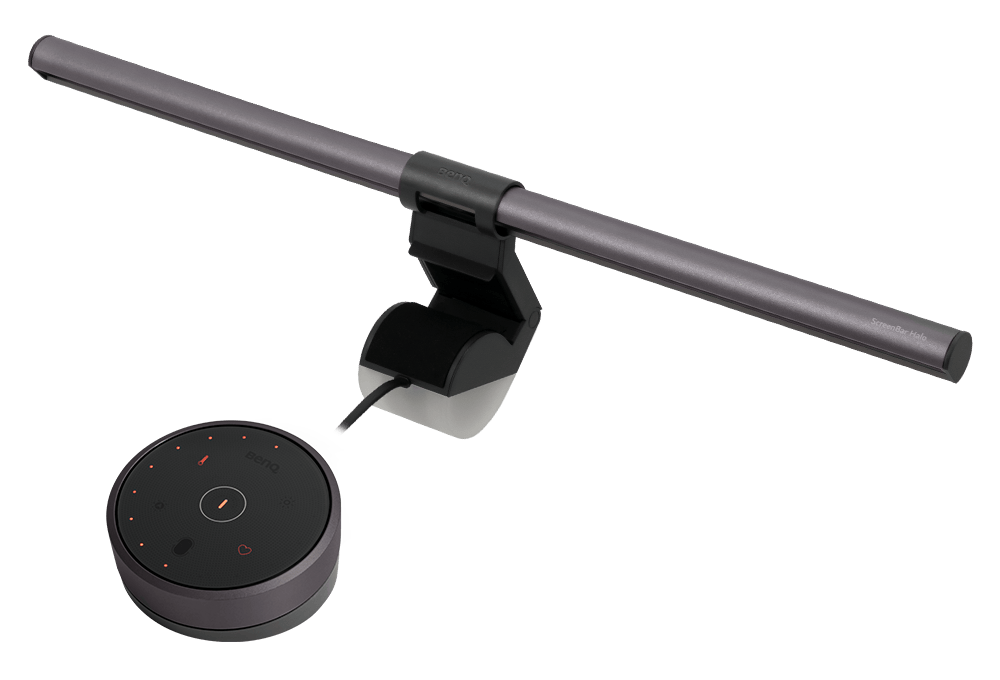
The computer monitor has conquered the desk, but the desk lamp has never quite figured out where to live. Put it to one side and it steals valuable space. Move it behind the screen and it shines at the wrong angle. BenQ’s ScreenBar Halo makes a neat architectural move: it perches above the display, illuminating the work below and the wall behind without needing another square inch of tabletop.
BenQ offers front lighting, rear bias lighting and a combined mode, plus a wireless controller for brightness and color-temperature adjustments. The company also advertises automatic dimming that responds to the surrounding light. These are sensible features for a desk that is used at different hours of the day, particularly when a window or ceiling light creates changing conditions.
The rear light is the interesting flourish. Rather than only illuminating paper and keys, it casts light behind the monitor and changes the visual atmosphere of the workspace. The front light, meanwhile, is meant to serve the unglamorous but essential task of illuminating documents without taking over the desk. The practical benefit will depend on monitor shape, room layout and the user’s preference for lighting.
There is more to good desk lighting than making the room brighter. A pool of light can separate the working surface from the rest of a room, soften the contrast between a bright monitor and a dark wall, and give a workspace some character. BenQ’s front and rear lighting modes aim at different parts of that problem. The precise effect will vary with the desk, monitor and ambient light, but the design question is a good one: why should the lamp be a separate piece of furniture at all?
Before buying, measure the clearance above and behind the display, and verify compatibility with curved or unusually thick monitor housings. No lamp can promise to cure eye strain, and the experience of glare requires direct evaluation. Still, the ScreenBar Halo has an appealing principle: equipment that improves the room without demanding more of its limited space.
Further reading: product details.

