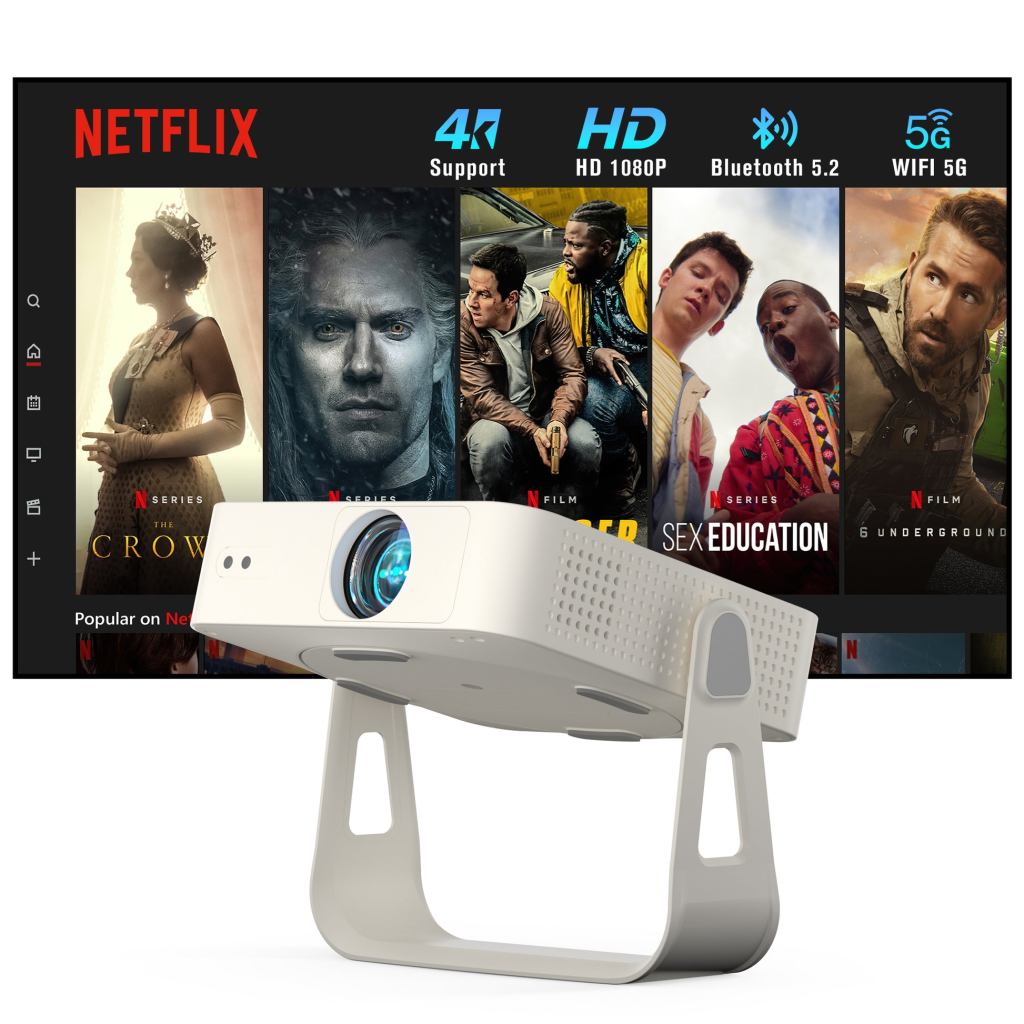
Buying a projector online is an act of optimism. The product photographs show a neat little machine casting a glorious picture across a bedroom wall. The room looks spacious, the image crisp, and the entire setup apparently takes seconds. I bought a XuanPad Q5 mini projector through Amazon in April 2026, drawn to the prospect of big-screen viewing without mounting a television. Months later, the question occupying me was less romantic: Why was the fan making such an extraordinary racket, and what would it take to have the problem fixed?
The noise became troubling enough that I stopped feeling comfortable using the projector. On November 1, I wrote to the manufacturer describing an unusually loud fan and asking for a replacement. I was concerned that a malfunctioning cooling system might allow the device to overheat. That was a concern, not a confirmed diagnosis; I had no temperature measurements or inspection report establishing a thermal defect. What I did have was a projector that no longer felt like something I wanted running beside me during a movie.
It’s worth separating that experience from the capabilities XuanPad advertises. The Q5 is a compact smart projector with native 1080p resolution, support for 4K input, a rotating stand, built-in streaming applications and wireless connectivity, according to the company’s product page. XuanPad lists it for $259.99 on its own website, although retailer pricing may vary. None of those listed features explains why a fan might grow unexpectedly loud, or what the buyer should expect when that happens.
The appeal of a cheap home cinema
An inexpensive projector occupies a pleasing middle ground. It is a way to turn an ordinary wall into the closest thing a small apartment may have to a movie screen. Unlike a television, a projector can be put away. It may need only a socket, a patch of wall and enough darkness to make the picture satisfying. For a household without a dedicated media room, that kind of flexibility can matter more than the latest image-processing trick.
The Q5’s marketing reflects that appeal. XuanPad points to a portable body, autofocus, keystone correction, a stand that can aim the image at different surfaces and access to familiar streaming apps. The goal is to make projection resemble using a smart television: switch it on, select a film, and avoid the peculiar rituals that older projectors demanded. The company’s specifications suggest a product aimed at convenience rather than professional home-theater calibration.
I am not going to give the projector a fictional picture-quality score. My documentation establishes that I bought and used it, that its fan subsequently became unacceptably loud to me, and that I sought help. It does not contain a careful comparison of brightness, color accuracy, contrast or motion handling against rival models. A fair account of this purchase should concentrate on the problem I can actually describe.
When the fan becomes the feature
Every projector has to manage heat. The light source and electronics consume power, and compact designs must move warm air through a relatively small case. Fan noise is therefore part of projector ownership, even with a perfectly functioning machine. In a quiet room, an otherwise unobtrusive cooling system may become noticeable during dialogue or at low volume. Whether that noise is acceptable is partly a matter of personal tolerance and where the machine sits.
A conspicuously loud or newly altered sound, however, raises a different question. Is it ordinary airflow, vibration from the enclosure, a blocked vent, dust, or a failing fan? Those possibilities cannot be distinguished reliably from an email. When I contacted XuanPad, I did not claim to have identified the cause. I described what I heard and asked the company to resolve it.
The timing is important. I ordered the device in early April and contacted XuanPad about the fan in November. I cannot say from the correspondence that the noise was present from the first day, only that it had become a serious enough issue to prompt a replacement request by then. A few months of ownership tell you something about how a gadget fits into life, but they do not automatically produce a complete engineering diagnosis.
In that first message, I said I was worried the fan might malfunction and the projector might overheat. I wanted a replacement and clear instructions. The company asked for a video so its staff could understand the sound. I supplied one. That was a reasonable request: a recording can distinguish a high-pitched whine, a mechanical rattle and ordinary airflow better than a written description.
The other half of the product is support
The exchange grew more complicated when the company explained its return process. XuanPad said it could arrange a replacement after the faulty projector arrived at a designated after-sales warehouse. It also advised against returning the product through Amazon, saying that doing so could close the order and affect its handling of the warranty. Those were statements made by support staff during my case, not a legal ruling about my rights or a finding that Amazon’s policies work that way in every situation.
I replied that shipping the faulty machine to a warehouse was not convenient. Since I had already supplied a video of the fan, I asked whether the company could send a replacement without requiring the original unit back. I supplied the requested information privately. As of the latest correspondence reviewed for this article, there was no documented agreement on that request and no confirmed replacement delivery.
This is a familiar point of tension in direct-to-consumer hardware. From the seller’s perspective, retrieving a device may help confirm the problem, prevent duplicate claims and provide a unit to inspect. From the buyer’s perspective, a return label, packaging, shipping and a trip to a drop-off point can turn a straightforward warranty request into a chore. A low price on the box does not make the buyer’s time worthless.
The Q5’s manufacturer advertises a two-year product-replacement warranty and after-sales support. Those assurances sound comforting when you are shopping. Their real meaning becomes visible only after the device develops a problem. Does the buyer receive a prepaid label? Is an advance exchange possible? How long is the process likely to take? Will the company explain a diagnosis or simply swap the unit? Those details can matter more than another streaming-service logo on the product page.
What I’d ask before buying another
The experience has changed what I would look for in a compact projector. I would still be attracted by easy setup, a built-in streaming interface and a stand that can point the image toward a blank wall. But I would read the warranty instructions before purchasing, not afterward. I’d want to know where a defective unit must be sent, whether the return is prepaid and what the seller does if the fault is difficult to reproduce.
I would also pay more attention to noise reports in owner reviews. A projector’s listed resolution says very little about the sound it makes beside a sofa. Neither does a manufacturer’s maximum brightness claim. Cooling can be particularly noticeable in smaller rooms where the projector sits close to the viewer. For me, an otherwise useful device becomes much less appealing if its mechanical noise competes with the film.
There are sensible precautions when evaluating unusual noise. Keep vents unobstructed, follow the installation-clearance instructions and check whether the surface beneath the machine amplifies vibration. If a fan suddenly sounds wrong, or if the device emits a burning smell or behaves erratically, stop using it and seek qualified support rather than taking it apart. None of these steps proves the cause of my Q5’s behavior; they’re ordinary precautions for powered electronics.
What I cannot conclude is that all XuanPad Q5 units have the same problem. One defective or objectionably noisy product is not evidence of a high failure rate. I also cannot claim the company refused to help. Its staff responded, asked for evidence and described a replacement procedure. My dissatisfaction concerns the unresolved practical question of whether I must ship the unit back before receiving a working one.
The verdict remains open
I’m sympathetic to the appeal of a low-cost projector. A little machine capable of putting a large image on a wall can make an ordinary evening feel like an occasion. The XuanPad Q5 promises just that sort of simplicity. My own ownership experience became less simple when the fan noise made me reluctant to use the device and the replacement process required further negotiation.
Until the support case is resolved, I am withholding a conventional review score. I wouldn’t want a prospective buyer to mistake a dispute about one unit for a comprehensive judgment about every Q5, any more than I would want a polished product photograph to stand in for a real test. The most useful thing I can report today is what happened and what questions the experience taught me to ask next time.
Ownership and disclosure: I purchased the XuanPad projector myself through Amazon in April 2026. This article is based on my use of the device and dated correspondence with XuanPad support through November 5, 2026. The company has not been accused of a confirmed overheating defect; I raised the possibility as a concern. I did not conduct calibrated image-quality or noise measurements. The replacement request was unresolved at the time of writing. Product image: XuanPad.

