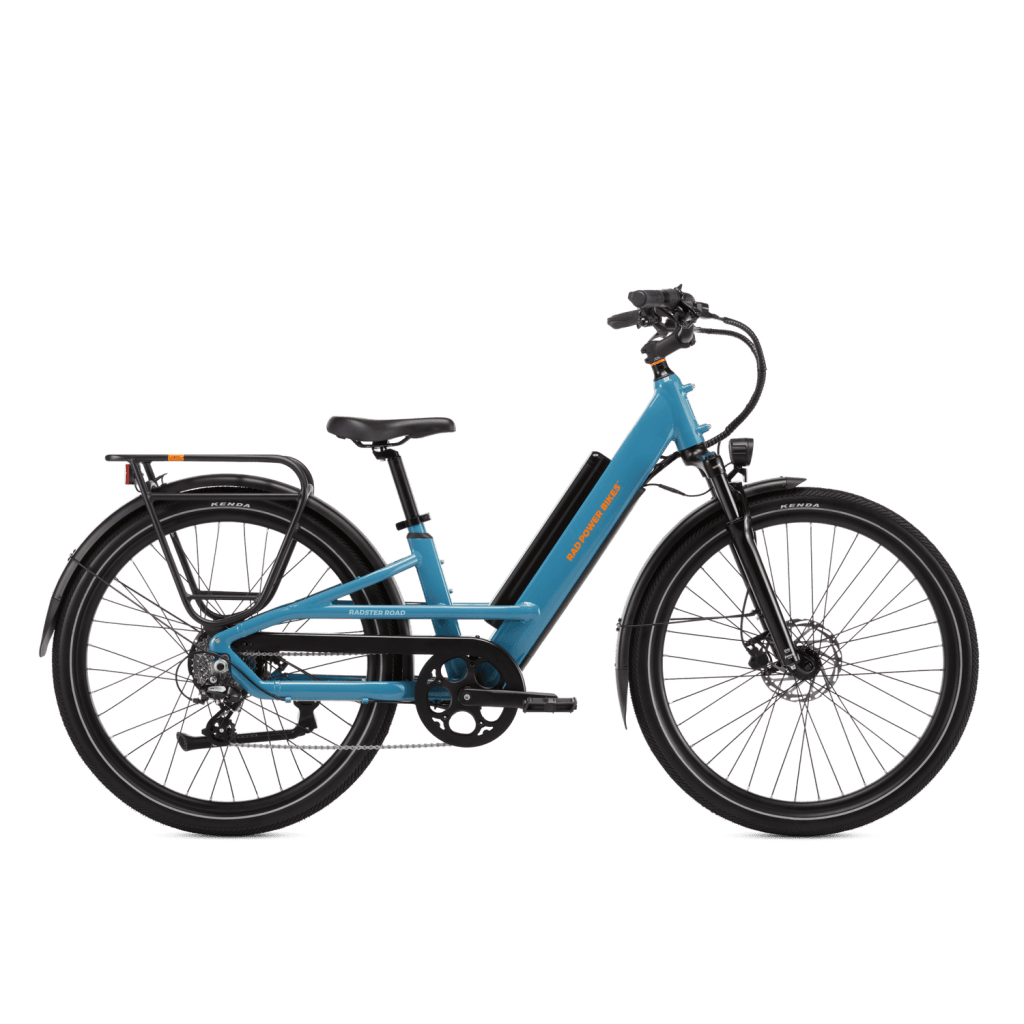
At roughly 75 pounds, the Radster Road isn’t coming upstairs with you. Leave it somewhere secure, though, and its bulk starts to make sense. During my 2024 evaluation, Rad’s powerful commuter tackled the stop-start rhythm of city streets with ease. The strong motor, upright seating and practical equipment made it feel ready for errands, not just weekend joyrides.
The Radster Road is a substantial machine. At roughly 75 pounds with its battery installed, it’s not a bike anyone will casually hoist onto a shoulder and carry up several flights. But the weight is partly the consequence of what it offers: a battery meant for longer rides, hardware intended for regular commuting and enough motor assistance to make quick starts easier. This is a bicycle for someone who has a place to store and charge it.
Power for the stoplights
Rad specified a 750-watt motor and a top assisted speed of 28 mph for the Radster Road. Those numbers put it firmly in the fast-commuter category, though local rules and selected operating class can affect how it is used. During my earlier evaluation, its power was the defining impression. I was particularly taken with the way the bike made hills and the stop-and-go rhythm of city riding less demanding. The motor was there when I wanted a boost, and there was little incentive to treat every intersection as a sprint.
The riding position was relatively upright, allowing an easier view of surrounding traffic than a hunched-over road-bike stance. That matters more to a daily rider than it might seem in a showroom. City cycling involves looking over shoulders, spotting pedestrians and making decisions quickly. A bike that encourages an alert, relaxed posture is easier to live with than one designed mainly to look fast.
Rad’s published maximum range was roughly 65 miles, depending on conditions and assistance level. In my original account, I had no serious concern about running out of power during ordinary city riding. That is not the same thing as completing a documented 65-mile battery rundown. Rider weight, stops, hills, wind and temperature can all reduce the distance between charges. Treat the specification as a ceiling under favorable conditions rather than a promise for every commute.
Everything a commuter needs
Hydraulic disc brakes and a conventional geared drivetrain were important parts of the experience. In earlier testing, I appreciated the feeling of control on city streets, including when the surface wasn’t ideal. I wouldn’t turn that into a measured stopping-distance claim: brakes depend on tires, maintenance and riding conditions. But confidence when approaching an intersection is a meaningful form of performance.
Rad also designed the bicycle with real cargo use in mind. A rear rack and a range of accessories make it easier to carry a bag or a small shopping load without turning the journey into a balancing act. The Radster’s integrated controls and display make assistance settings and battery information available without demanding constant attention. Those are exactly the small, dull-seeming decisions that determine whether a bike stays in regular use.
The battery design and security-minded electronics are among the model’s more distinctive features. Rad offered a battery system it marketed as Safe Shield, and the controls could be protected by a passcode or fob. Such features can add reassurance, but they don’t replace a proper lock, sensible charging habits or secure storage. Nor should an advertised safety system be read as an assurance that a battery cannot fail.
The catch: 75 pounds
The Radster Road gave me the impression of a bicycle designed around transportation rather than a collection of fashionable parts. Its strongest qualities were accessible power, useful equipment and an easygoing posture. It looked equally plausible for a regular commute and an unhurried ride on a weekend. Those aren’t extravagant ambitions, which is part of the reason it worked.
The weight is the obvious drawback. For an apartment dweller, storage may determine whether the Radster makes sense before the first ride. It’s also worth considering the total cost of ownership: a suitable lock, safe charging space, wear items and access to a workshop familiar with the brand. E-bikes are not simply ordinary bicycles with a motor bolted on; their electrical systems can make service more specialized.
The model’s features and availability have evolved since my 2024 evaluation, and I would check the exact specification and current service arrangements before ordering. I have not performed a fresh range test or compared current production revisions with the original bike. The road impressions here belong to the period when I reviewed the model.
Verdict
I liked the Radster Road for the same reasons I’d consider using one for everyday transportation: it had plenty of assistance, useful commuter equipment and a reassuring feel on busy streets. It is too heavy to recommend blindly to anyone living up several flights of stairs, and its range claim deserves the usual caution. For a rider with somewhere sensible to park it, though, the Radster Road made a persuasive argument for leaving the car at home.
Testing disclosure: Based on ride observations included in my co-bylined 2024 e-bike buying-guide work. This is an independently written review, not a new 2026 road test. Battery range is a manufacturer estimate, not a measured result. Product photograph: Rad Power Bikes.

