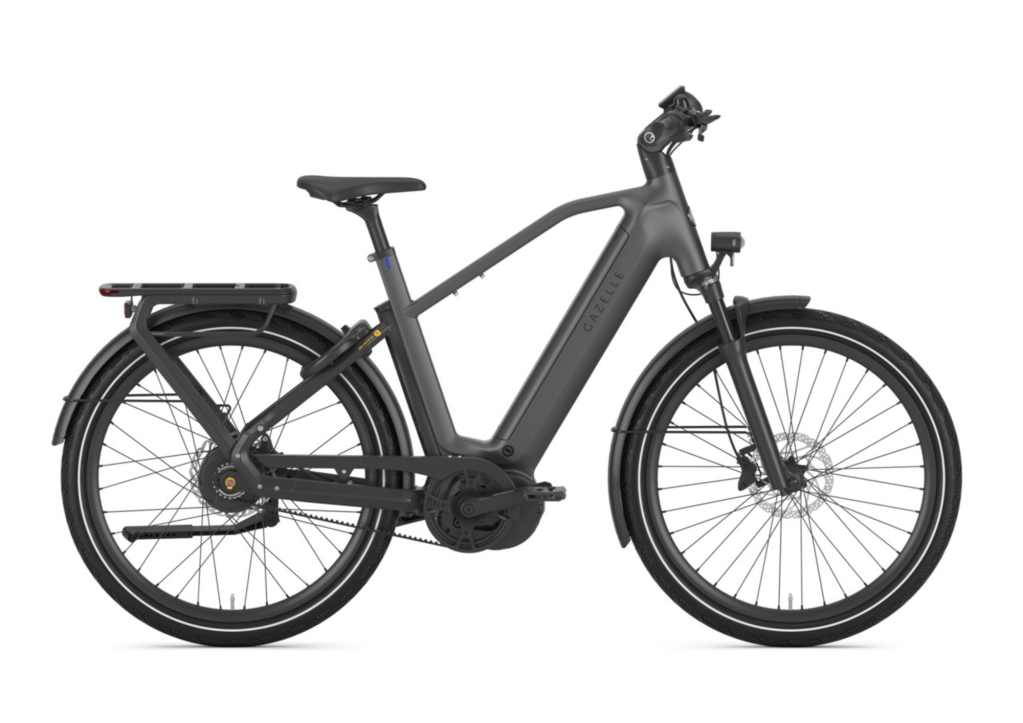
The first thing I noticed about the Gazelle Eclipse C380+ wasn’t its price, which hovered around $6,000 when I tested it in 2024. It was the motor. In New York traffic, the Bosch mid-drive answered my pedaling so naturally that I stopped thinking about the assistance. For an electric commuter, that is a remarkable trick.
I rode the Eclipse for a buying-guide assignment in 2024, when it was one of the costlier commuters on the market. This review draws on those contemporary impressions, not a new test of the latest production model. It is also worth separating that firsthand experience from specifications: a quoted maximum range is not a mileage result, and memories of a fine ride cannot establish how a battery will perform years later.
The motor is the magic
Gazelle’s Eclipse C380+ uses a Bosch Performance Line Speed motor mounted at the crank, a location that changes the relationship between rider effort and assistance. With a rear-hub motor, the bike can seem to pull you forward as a separate power source. A responsive mid-drive system feels more closely linked to the act of pedaling. That was the most pleasing part of the Eclipse. I could ease into motion, change pace and weave through the ordinary unpredictability of New York streets without having to think much about the motor.
The assistance had the effortless quality I want from a commuter. I could cover ground around yellow cabs and delivery vehicles while still feeling involved in the ride. It wasn’t a motorcycle impression imposed on a bicycle frame. It was closer to riding with unusually fresh legs. The distinction matters if, like me, you enjoy cycling itself and want an e-bike to extend rather than erase that pleasure.
The original guide described a trip from the Bronx toward Brooklyn that made little apparent impact on the displayed battery charge. That is an anecdote, not a standardized endurance measurement, and I would not translate it into a claim that everyone can reproduce a particular distance. The manufacturer’s range estimate varied with conditions and setup. What I can say is that the bike didn’t make range anxiety a central concern during the rides covered by those notes.
Built for the daily grind
The Eclipse’s quality extended beyond the motor. Its brakes felt strong and predictable in the city, and its substantial integrated battery was packaged with a view to daily use. The upright riding position and large wheels made the bike seem well suited to negotiating unpredictable pavement and sharing space with traffic. These are ordinary requirements, but they are also the qualities on which a practical commuter succeeds.
Gazelle is a Dutch bicycle manufacturer with a long history of building everyday transportation. That background shows in the Eclipse’s general approach. Rather than dressing the bike as an aggressive off-road machine, the design emphasizes a composed riding position, weather-conscious fittings and equipment meant to be used regularly. It has the air of something intended to become part of a routine.
Price complicates the recommendation. The Eclipse was positioned around the $6,000 mark in the period I reviewed it, far above many hub-drive commuters. Even allowing for the refinement of a Bosch system, that is an enormous outlay for a bicycle. The premium must buy real comfort, service access and enough enjoyment to justify keeping the machine for years. If you’re only taking occasional short rides, it would be hard to make the financial case.
There are practical drawbacks to premium electric bicycles, too. Replacement batteries, electronic components and service can be expensive. A large, sophisticated commuter also demands secure storage. Buyers should find out which nearby shops will support the specific motor and drivetrain before choosing a bike on the basis of a pleasant test ride.
Who should spend this much
I would put the Eclipse near the top of the list for somebody who already knows they will commute regularly, has a safe place to park and cares deeply about the feel of pedaling. Its advantage isn’t the satisfaction of owning a costly machine; it’s the way the motor fades into the background once the ride begins. That quality is difficult to convey through specifications and easy to appreciate in the saddle.
The less committed rider has good reasons to look elsewhere. There are less expensive bikes with excellent motors, capable brakes and sufficient range for ordinary trips. The Eclipse isn’t necessary for getting from one neighborhood to another. It is a luxury interpretation of a genuinely useful transportation tool, and should be judged accordingly.
Verdict
The Gazelle Eclipse C380+ was one of the most refined electric commuters I rode during that period. I liked the natural-feeling assistance, confident braking and sense that the machine had been designed for the long haul. The price is formidable, and I wouldn’t pretend to know how an individual used example will age. But as an experience of what a well-sorted mid-drive commuter can feel like, it left a lasting impression.
Testing disclosure: Based on riding observations from my co-bylined 2024 e-bike buying-guide work, not a fresh 2026 road test. Pricing and specifications refer to the period evaluated and may differ now. Product photograph via Seacoast eBikes.

