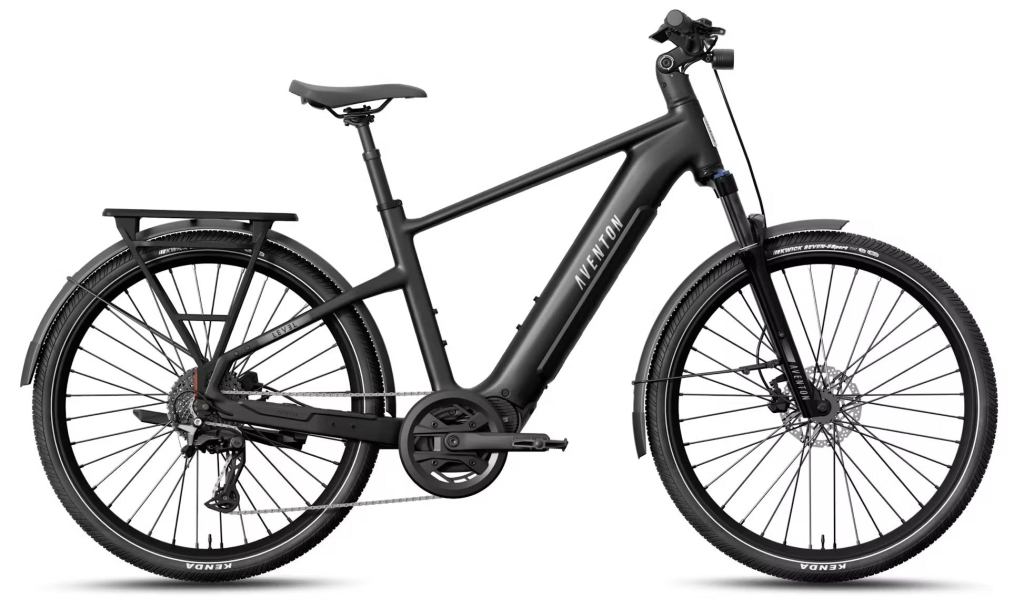
Aventon Level 4 ADV. Product image: Aventon / BikeTek.
Image: Aventon Level 4 ADV. Manufacturer product image via BikeTek.
The first problem with my new electric bicycle was that it wouldn’t turn on. Aventon’s Level 4 ADV had arrived, and I had arranged for a local bike shop to assemble it. Instead of setting out to find out whether this sophisticated commuter could make cycling around New York more pleasant, I found myself asking the company for technical help. The bike was still at the shop. It was a rather unromantic beginning for a machine marketed as a smarter way to travel.
That experience matters because buying an electric bike is not like buying a phone. The thing arrives as a large mechanical object that may require assembly, adjustment and a place to be stored. When something goes wrong, an app and a restart button may not be enough. A capable repair shop, reachable support and a practical warranty become part of the ownership experience. I was grateful that Aventon’s representative helped coordinate a call with the shop, but the episode altered the question I wanted to ask. Before worrying about motor refinement or automatic shifting, I needed the bicycle to work.
Aventon supplied this bicycle for evaluation. The Level 4 ADV is an ambitious $2,799 commuter model with an 800-watt-hour removable battery, a mid-drive motor rated for 100 newton-meters of torque and an electronically assisted Shimano CUES 10-speed drivetrain. Aventon advertises up to 110 miles of range. Those figures place it well beyond the category of modest electric bikes intended for occasional short trips. They also raise expectations about support, fit and dependability that cannot be resolved by an impressive specifications table.
A commuter with an unusually elaborate drivetrain
Aventon’s Level 4 family divides into two models. The less expensive REC uses a hub motor and conventional shifting. The ADV puts its motor at the crank and integrates an electronic shifter with an AutoShift function. In broad terms, a mid-drive motor can work through the bicycle’s gears, making the relationship between cadence, torque and hill climbing different from a simple hub-drive system. The way this particular bike behaves under load, however, requires a functioning test unit and actual rides, not an inference from the motor’s position.
Aventon calls the motor Ultro S and specifies a maximum torque of 100Nm with 750 watts of peak power. Torque is a useful clue about the assistance available when starting and climbing, but the number says little by itself about the texture of the power delivery. Riders also care about whether assistance arrives predictably, how readily the motor responds when they ease off the pedals and whether the bike feels natural when moving slowly through traffic. My delivery problem delayed the opportunity to form those judgments.
The electronic shifting is a similarly interesting bet. Instead of asking a rider to make every gear choice with a conventional lever, AutoShift is intended to select an appropriate gear based on cadence and other settings. This could make urban cycling simpler, especially during frequent starts and stops, but it also introduces another software-controlled layer to a machine that already has electronics managing the motor and battery. Automatic shifting is useful only if its preferences match the rider’s habits and it offers understandable ways to intervene.
Aventon lists four assistance modes, including Auto, Eco, Sport and Turbo. The obvious question for a commuter is whether those modes give genuinely distinct choices or simply rearrange the same battery-versus-power compromise. The 110-mile range estimate is a manufacturer maximum achieved under particular conditions; hills, wind, rider weight, temperature, cargo and chosen assistance level can change it substantially. Without a documented route and battery measurement, it would be misleading to report that range as something I achieved.
The practical hardware matters more than the pitch
At a claimed 61 pounds, the ADV is not a lightweight bicycle in the ordinary sense. Carrying it up apartment stairs, lifting it onto a rack or maneuvering it into narrow storage can present a challenge even before you add locks and luggage. The removable battery helps with charging logistics, but it does not make the bicycle itself light. In a city with limited bicycle storage, that distinction is often more important than a slightly higher motor specification.
The manufacturer includes a suspension fork with 100 millimeters of travel, a suspension seatpost, fenders, a rear rack and integrated lighting. Those are practical amenities. A commuter spends time on imperfect pavement, rides through occasional puddles and may need to carry a bag rather than sling everything over one shoulder. This collection of components suggests a product intended to substitute for some everyday journeys, rather than a recreational bicycle with a motor attached as a novelty.
Aventon specifies Tektro two-piston hydraulic disc brakes and 27.5-inch wheels with 2.2-inch tires. Hydraulic brakes can offer strong stopping performance with less hand effort than many cable systems, but braking quality depends on adjustment, pad condition, tire grip and the rider. The existence of a good component on the specification sheet is not the same as confirming it performed well on a particular test route. Assembly and post-assembly inspection remain crucial.
The bike also has built-in connected-security features, including GPS-based tracking, alerts and an electronic rear-wheel lock. These address a real source of anxiety for city riders, though connected security is not equivalent to a physical lock or a secure parking location. Connectivity brings its own questions about cellular availability, service continuity and what features remain functional if the network connection fails. Anyone paying extra for those features should understand the conditions attached to them.
The setup is part of the review
The paperwork in my correspondence records a sequence that is more instructive than a polished product demonstration. I accepted the offer of a review bike and arranged local assembly. Afterward, I reported that the machine would not power on. Aventon’s representative offered to coordinate technical help with the bike shop; I confirmed that the bicycle was still there and later received a message that the shop had said it was ready for collection. That establishes a problem and an attempt at resolution, not a completed diagnosis of the fault.
It would be tempting to transform that inconvenience into a dramatic claim about reliability. That would be unfair. One unit that needs help during setup is not proof of a widespread defect, and my emails do not establish what caused the failure. The experience is nevertheless legitimate reporting about the friction involved in getting a sophisticated electric bicycle onto the road. A buyer should know that delivery, assembly and local service can be as consequential as the specifications celebrated in a launch announcement.
The broader lesson concerns where electronics and bicycle mechanics meet. A modern e-bike involves sensors, a controller, firmware, a battery-management system, a motor and mechanical parts that must all work together. When a conventional bicycle refuses to move, the problem is often visible. When a heavily computerized bike refuses to wake, the cause may not be evident to the owner or even to a general repair shop without the right support. A strong local dealer network and clear troubleshooting guidance help bridge that gap.
Who should consider it?
On paper, the Level 4 ADV looks best suited to a rider who wants a serious commuter with substantial assistance, a generous claimed range and convenience features beyond what basic electric bikes offer. Its rear rack, fenders and suspension are reassuringly workmanlike. The central expense, however, requires an honest comparison with a less complicated model such as the Level 4 REC. A rider who values easy maintenance and ordinary shifting may have little reason to pay for electronic AutoShift, regardless of how ingenious it sounds.
My experience also underlines the value of purchasing through a shop equipped to assemble and support the exact bicycle. A local partner is not merely a nice addition to the sales process when a product weighs 61 pounds and combines a sophisticated drivetrain with proprietary electronics. It may be the difference between a quickly resolved issue and a very expensive object sitting idle. The total cost of an e-bike includes not only money but the practical effort of keeping it working.
I am not assigning the bike a ride-quality score from the material documented here. The emails substantiate arrival, assembly trouble and support coordination; they do not contain a reliable record of a range test, sustained riding impressions or the final mechanical diagnosis. Those gaps matter. A feature can serve as an informed setup report without pretending to settle questions that only road testing can answer.
For all its technology, the Aventon Level 4 ADV left me with a very old-fashioned insight. The promise of a better commute begins with a bicycle you can collect, power on and trust. Until that basic transaction works smoothly, no amount of electronic shifting, tracking or motor torque can make the journey feel futuristic.

