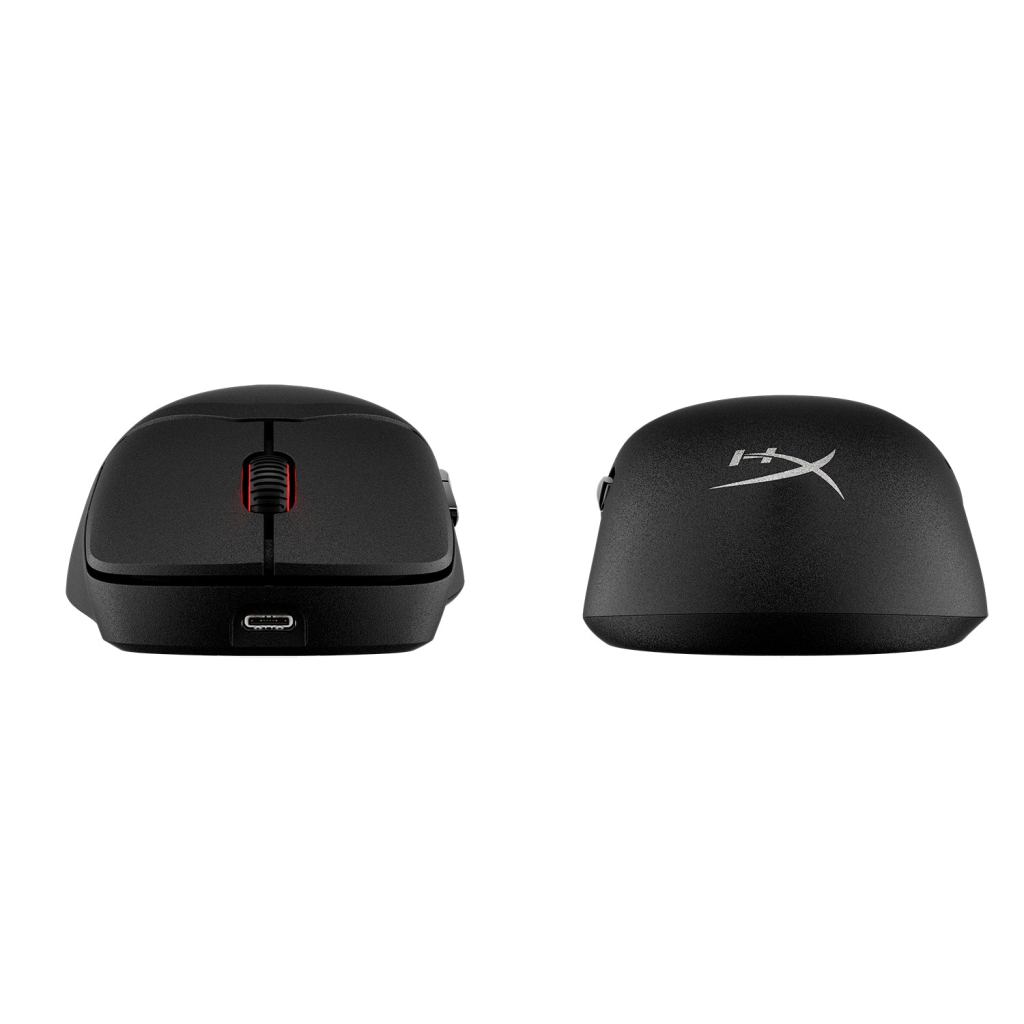
Most gaming mice arrive with a fixed idea of what a hand should look like. If the curve of the shell is wrong, the thumb buttons sit too low or the hump touches the palm in the wrong place, the buyer is expected to adapt. HyperX’s Pulsefire Saga Pro tries a more direct solution: make the body itself adjustable. Parts of the shell and its controls attach magnetically, and HyperX offers multiple configurations before introducing downloadable parts that can be printed in 3D. In testing, the hardware swapping worked. The surprise was how rarely I felt compelled to do it.
At $119.99, the Saga Pro is not priced as a curious experiment. It enters a difficult market where established rivals sell excellent lightweight mice with powerful sensors and dependable wireless systems. HyperX needs its movable pieces to provide an advantage beyond the small pleasure of dismantling a gadget without tools. The modularity is genuine, but the value depends on how particular you are about the shape under your fingers.
The magnets are better than the variations
The shell, main button covers and side grips can be lifted and exchanged without a screwdriver. I found the magnetic connections secure: parts seated firmly and did not shift during rapid movements in games. That is the essential requirement for a design like this. A loose shell would turn an interesting customization system into an input device that feels unfinished. HyperX has thought carefully about the basic mechanical execution, and the change between configurations is fast enough that experimentation does not feel like a chore.
The included alternate pieces make subtler differences than the word ‘modular’ suggests. One upper shell changes the profile slightly, one set of button surfaces alters texture and the side components vary their height. I could feel the distinctions, but they did not transform the general shape. Most people are likely to settle on a configuration and leave the other pieces in the box. A reader attracted by the promise of an entirely personalized mouse should understand that the included parts offer refinement rather than reinvention.
The more ambitious possibility is 3D printing. HyperX makes design files available for people who can create alternative components, allowing a motivated owner to experiment with shapes not supplied in the retail package. That opens the door to genuinely personal geometry and to an unusual kind of hardware tinkering. It also demands a printer, skill and time that most gamers will not have. An advertised ecosystem of customizable parts is not the same thing as a large, mature library of successful designs.
A competent gaming mouse beneath the experiment
Stripped of its novelty, the Saga Pro has a familiar competitive specification. Its HyperX 26K optical sensor reaches a quoted 26,000 dpi, and the company supports wireless polling at up to 4,000Hz. Optical main switches provide crisp tactile feedback. Testing in Apex Legends and Counter-Strike 2, I found tracking smooth in the sensitivity range I actually used, around 800 to 3,200 dpi, and did not encounter missed inputs during ordinary sessions. Those are observations, not a laboratory validation of every extreme number on the box.
The button feel was one of the stronger parts of the experience. The clicks were quick and distinct, with none of the mushiness that can make an otherwise capable mouse feel cheap. The shell also resisted obvious flex under pressure, a useful achievement in a product designed to be disassembled. I would not claim that a tool-free exterior guarantees durability over years of repeated swaps, but the mechanism did not feel fragile in the period I used it.
At 72 grams, the mouse is not particularly heavy by ordinary standards. In contemporary competitive gaming, however, there are lighter alternatives, including models that cost about the same. The trade-off is clear: replaceable shells and components bring complexity and some mass. Players who prioritize rapid lifting and repositioning may reasonably prefer a 60-gram design without any detachable pieces. The Saga Pro demands that you care about fit customization enough to accept that difference.
Four thousand updates isn’t the whole experience
A 4,000Hz polling rate means the mouse can report inputs to the computer thousands of times a second, reducing the potential interval between updates. The practical gain depends on the computer, display and game, and higher settings can increase power consumption. HyperX rates the device for up to 90 hours at 1,000Hz and around 30 hours at 4,000Hz. Those are manufacturer estimates, not my own full battery rundown. They illustrate the expense of chasing maximum responsiveness when a conventional setting may already feel perfectly quick.
The NGENUITY software provides sensitivity settings and button mapping, but its customization is less expansive than the software supplied with some premium competitors. The device also has limited onboard profile storage. A mouse marketed around personalization ought ideally to make it easy to carry several configurations among computers, especially when its physical shell already offers ways to adapt. That gap between mechanical freedom and software restraint is an odd little contradiction.
For the tinkerer rather than the minimalist
There is an enjoyable earnestness to the Saga Pro. Hardware manufacturers frequently talk about customization when they mean only that an LED can glow blue rather than red. HyperX lets the owner actually exchange pieces of the product. The design invites a more physical relationship with the mouse, something close to a miniature construction kit. I liked that quality. I also kept returning to the same question: would the alternative parts make enough difference to alter what I would buy?
The nearest rival within HyperX’s own range is the Pulsefire Haste 2 Pro 4K, which provides a similar sensor and polling specification in a lighter, fixed body. It makes a strong case for buying the mouse that fits your hand in the first place rather than paying for the possibility of adjustment. The Saga Pro is the more eccentric choice, and it will be the right one for some. But its strongest advantage belongs to the buyer who can make or acquire genuinely different components, not simply rearrange the included pieces.
The Saga Pro succeeds at the difficult mechanical task it sets itself. Its parts attach cleanly and stay put, its tracking was reliable in the games I played, and its optical clicks felt good. What it does not establish is that modularity is worth the premium for everyone. Unless you are particular about shape or excited by the prospect of printed components, lighter mice deliver the same essential experience with less fuss. HyperX has built a credible invitation to customize. Whether you need to accept it is another matter.

